
Tropical fish aquariums bring a burst of color and lively energy to any area, and starting out with the right fish is crucial for beginners. Based on personal experience, your first fish choices can make or break your intro to this hobby—they shape how much fun you have and how easy your tank is to look after. This all-in-one guide highlights ten popular tropical fish I’ve found beginner-friendly, tough, and packed with personality. These picks are easy to care for, pretty forgiving, and deliver next-level cool visuals in a home tank.
Why Start with Beginner friendly Tropical Fish?
Aquariums sometimes look more complicated than they really are, especially when you start with beginner friendly fish. These fish are usually hardy, adjust to a range of water conditions, and stay healthy with fewer issues. This keeps things easy and makes for a successful first adventure while you’re learning.
Over the last decade, the hobby has grown fast—millions of home tanks get set up each year, and a thriving community is always eager to answer questions or offer advice. Picking the right species as you start out is one of the best moves you can make.
Most of the tropical fish available come from exotic places around the globe—from South America’s slow rivers to quick streams in Southeast Asia. With them, you get bold colors, fun social behaviors, and a window into wild habitats right at home.
Getting Started: What to Know Before Choosing Your First Fish
Not all tropical fish are easy for beginners, so here are a few points I recommend you think about before picking your first tankmates:
- Size as an Adult: Some fish stay small but others grow much bigger than they look in stores. Always check their adult size so you aren’t caught off guard.
- Temperament: Community fish tend to be peaceful, but others can get pushy or nip at fins. It’s best to match temperament for a relaxed tank.
- Hardiness: Tougher fish can shrug off beginner mistakes like temperature changes or water that’s not perfect.
- Feeding Style: Some fish will eat anything, others are fussy. Beginner picks are usually easy to feed and not picky.
If you kick things off with hardy, adaptable fish, it’s easier to keep your aquarium fun and full of discovery. Below are the top ten tropical fish that almost always work out well for folks new to the hobby.
Top 10 Most Popular Beginner Tropical Fish (and Why They’re Great)
- Guppy
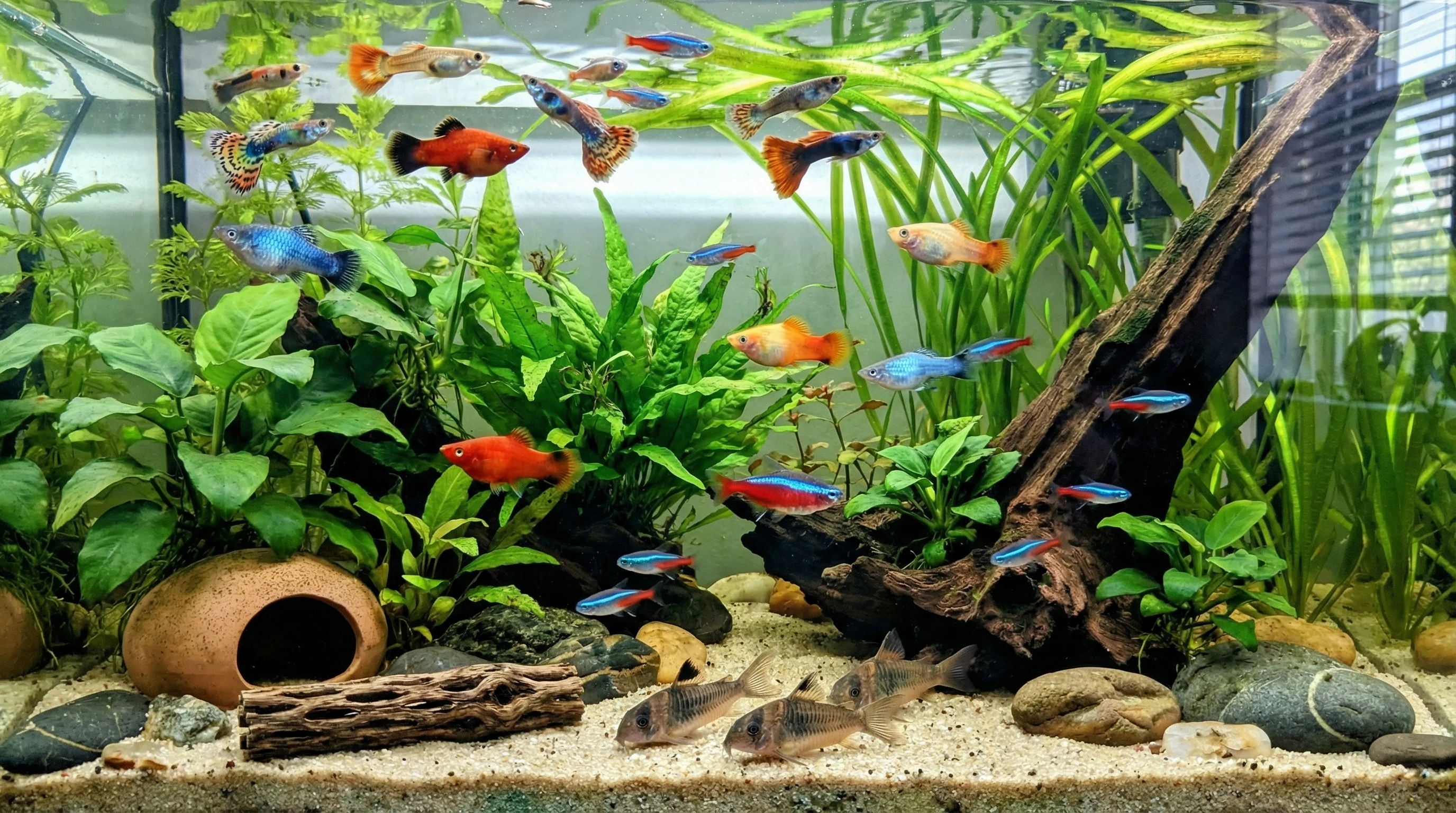
Guppies show off loads of color combos and are playful swimmers. They’re tough, breed quickly, and always offer something to see. They can handle a range of conditions and love being in groups of at least five. Flake food suits them just right. - Zebra Danio
Zebra Danios are nonstop swimmers with clear stripes. They’re legendary for how tough they are and forgive mistakes like temperature swings. A 10-gallon tank will do, but a bigger group (six or more) keeps them happy. - Platy
Platies come in just about every color and don’t outgrow smaller setups. They’re peaceful, mix well with other community fish, and eat nearly anything. Keep a few together for best results—they’re not picky about water. - Betta (Siamese Fighting Fish)
Bettas have gorgeous fins and bold attitudes. Male bettas need to be kept solo, as they’ll fight with others, but are perfect for compact tanks. They’re adaptable about water quality, and females can occasionally share a “sorority” setup if you want to get creative. - Corydoras Catfish
Corys keep the bottom clean by eating leftovers. They’re gentle, sociable, and help tidy your tank. Keep three or more together for best behavior and use sand or smooth gravel for their sensitive whiskers. - Molly
Mollies deliver an eye-catching boost to your tank and are laidback. They’re cool with both salt and fresh water and are happy eaters of algae as well as flakes. Group them up for active swimming and minimal trouble. - Swordtail
Swordtails add a dramatic look, especially males with long “swords” on their tail fins. They’re peaceful, sociable, and thrive in typical community tanks like platies do. - Neon Tetra
Neon Tetras flash bright blue and red, schooling in groups of six or more. They bring nonstop movement and shine to a tank. They prefer steady water conditions—soft and slightly acidic for best colors and health. - Cherry Barb
Cherry Barbs are smaller, gentle barbs that suit peaceful tanks. Their colors turn brilliant red during breeding, and they trust their group for security and activity. - Bristle-nose Pleco
Bristlenose Plecos are smaller than regular plecos and keep algae in check. They’re hardy, shy, and make the tank bottom look cool. Driftwood is handy for these guys; it helps with digestion and gives them cover.
Setting Up Your First Tropical Fish Tank
Making sure your tank is set up properly is essential to keep your fish happy. Here’s the process I find incredibly useful:
- Pick the Right Tank Size: A 20-gallon tank is a strong starting point for a small community, but a 10-gallon tank works for species like Bettas, Guppies, or Zebra Danios.
- Cycle the Aquarium: Cycling grows good bacteria to break down waste. It takes a few weeks and is vital for healthy fish. Always check your water along the way.
- Choose a Filter and Heater: Most tropical fish need stable warmth (75-80°F/24-27°C). Use a filter to clear up debris and a heater to keep temperature steady.
- Add Substrate, Plants, and Hideouts: Gravel or sand on the bottom works well. Live or plastic plants and decorations make fish feel secure by giving hiding places.
- Stock Slowly: Add just a few fish at first and avoid crowding the tank. Building up slowly prevents ammonia spikes and keeps the fish healthier.
Always research the needs of the species you add, especially for community setups. Some need more room or specific water types, but the list above is a tested formula for most beginner setups.
Common Beginner Mistakes and How to Avoid Them
- Adding Too Many Fish Too Soon
Overstocking right after setup usually leads to water issues or sick fish. Be patient; stock slowly, and make sure the tank is cycled first. - Skipping Water Testing
Regular water checks for ammonia, nitrite, and nitrate are essential. It’s not a chore but a smart step to catch issues early. Test kits are cheap and helpful. - Overfeeding
Extra food clouds up water and stresses your fish. Feed just what can be eaten in about two minutes, once or twice daily—less is often better.
Paying attention to details like these keeps your aquarium healthy and your fish active and vibrant.
Real-life Benefits: Why These Fish Work for Beginners
Based on my own tanks and stories from other aquarists, these ten fish aren’t just survivors—they truly thrive in beginner tanks. Start with Guppies and Corydoras and you’ll get color, movement, and few headaches if you cover the basics. Neon Tetras or Cherry Barbs bring a peaceful buzz of activity. Bettas, when solo, show off unique character and even react to their caretakers.
- Community Tanks: Mixing Guppies, Platies, and Corydoras brings a blend of color and calm without territory battles or stress.
- Feature Fish: A solo Betta gives you a striking centerpiece and a low-maintenance option to boot.
- Algae Control: Bristlenose Plecos double as cleanup crews—making tank maintenance easier by eating up pesky algae.
These benefits keep early aquarium adventures simple, low-stress, and rewarding as you pick up new skills and confidence.
Frequently Asked Questions
What’s the easiest fish to keep for true beginners?
Answer: Guppies and Zebra Danios are top contenders. They’re extremely hardy, don’t mind small changes, and offer loads of activity for new hobbyists.
How many fish can I add to my first tank?
Answer: It depends on tank size and species. A good rule of thumb is about one inch of fish per gallon, but always check out the specific needs—or use stocking calculators online for guidance.
Do I need live plants?
Answer: Live plants help keep water clean and provide hiding spots. While not required, they boost fun and encourage more natural fish behaviors.
How often should I feed tropical fish?
Answer: Feed once or twice daily, only what is eaten in one to two minutes. Overfeeding is common among newcomers, so it’s worth being cautious.
Wrapping Up: Beginner Tropical Fish Are All About Enjoyment
Choosing hardy, lively, and colorful fish can turn aquarium keeping into an easy, enjoyable hobby for beginners. The species on this list—Guppies, Platies, Corydoras, and the rest—are all proven picks for anyone learning the ropes.
Focus on easy-care species, add them in slowly, and set up your tank carefully for a truly rewarding experience, even if it’s your first ever fish. With some patience and the right start, your aquarium will shine with color and offer relaxation and joy every day.